
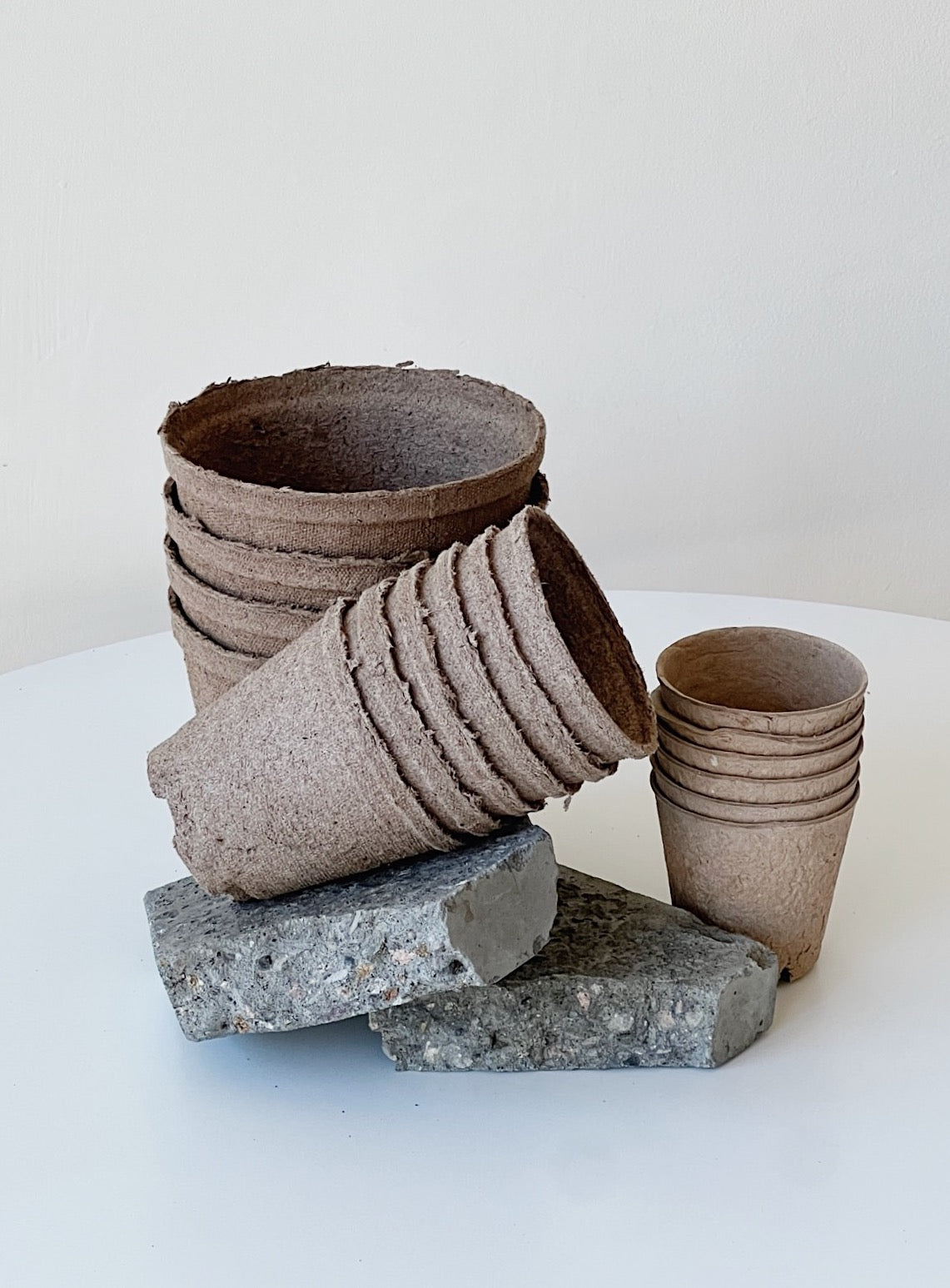
Biodegradable pots
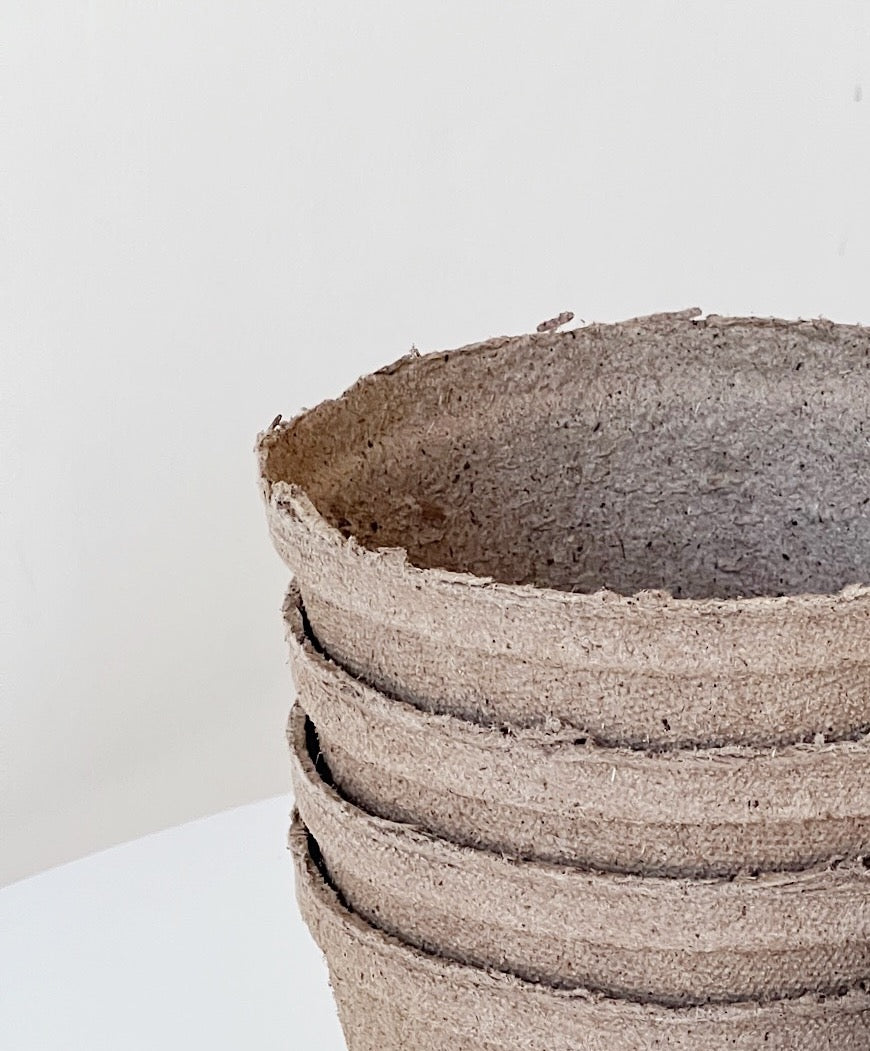
Biodegradable pots are made from compostable natural materials. Over time, they break down and return to the soil, reducing long-term plastic waste.
-
Why We Use Them
Traditional plastic nursery pots can remain in landfills for decades, so we chose a compostable alternative. These breathable containers support airflow around the roots and can be planted directly when it is time to move up a size.
-
Planting in Biodegradable Pots
- Use biodegradable pots much like standard nursery pots, but expect them to dry more quickly. Check the soil regularly, and support both the base and sides when moving the pot to avoid tearing the rim.
- Our soil blend for biodegradable pots balances airflow with greater moisture retention. Water only after checking the soil; frequency will vary with the plant, pot size, season, and conditions in your home.
-
How Long Do They Last?
Indoors, a biodegradable pot typically lasts about 12–24 months. In active composting conditions, it may break down in less than six months. Natural wear and softening over time are expected.
-
How to Water Plants in Biodegradable Pots
- Step 1: Check the soil. Many plants prefer some drying between waterings, while moisture-loving plants may need a more consistently damp mix.
- Step 2: Gently remove the outer sleeve. Each biodegradable pot includes a reusable sleeve for easier handling.
- Step 3: Take the plant to a sink. Water slowly and evenly until water drains from the bottom. Repeat only if needed to moisten the soil thoroughly.
- Step 4: Allow excess water to drain before returning the plant to its sleeve and usual location.
-
How Often Should I Water?
There is no universal watering schedule. Biodegradable pots dry faster than plastic nursery pots, so check the soil once or twice each week. Water when the moisture level suits the specific plant rather than relying only on the calendar.
Does bottom watering work for a biodegradable pot?
Yes. The pot will absorb some water and may temporarily soften. Allow it to drain and dry before returning it to its sleeve.
How to repot
When moving to a larger pot, you may plant the biodegradable pot directly into the new container. If you are transferring the plant to a decorative or clay pot of a similar size, trim the rim or remove the biodegradable pot carefully. See the soil page for detailed repotting instructions.
Some common issues
The pot may feel damp after watering. This is normal; allow it to drain and dry with good airflow.
Surface mold can appear in persistently damp conditions. Improve airflow, allow the pot to dry between waterings, and gently remove visible growth.
The material can tear when wet. Support the base and sides whenever you move the pot.