Plant Care, Made Simple
Every plant has different light, soil, water, and humidity requirements. Learning about individual needs and taking care of them accordingly is the key for them to thrive.
Light
-
Plants consume light to perform photosynthesis. Most plants can digest a good amount of light in the wild, but houseplants are cultivated in greenhouses, and harsh direct sunlight may get them burnt. Thus, knowing your environment and choosing the right place for your plants helps them to grow in your care.
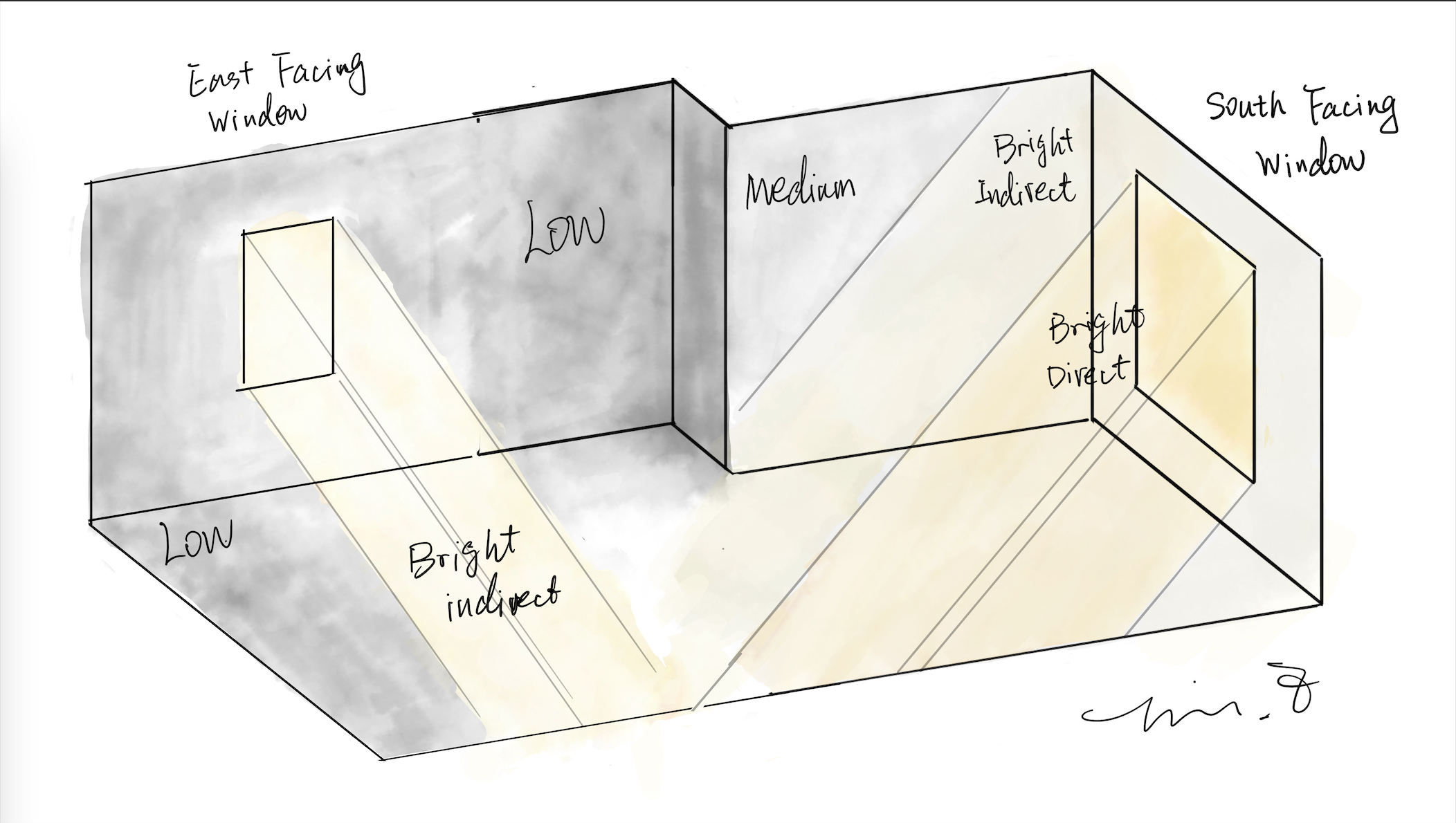
Roughly speaking, there are four types of lighting conditions for indoor plants.
- Bright direct sunlight
- Bright indirect sunlight
- Medium-light
- Low-light
The illustration below explains how to tell your home's lighting condition.
-
Water
-
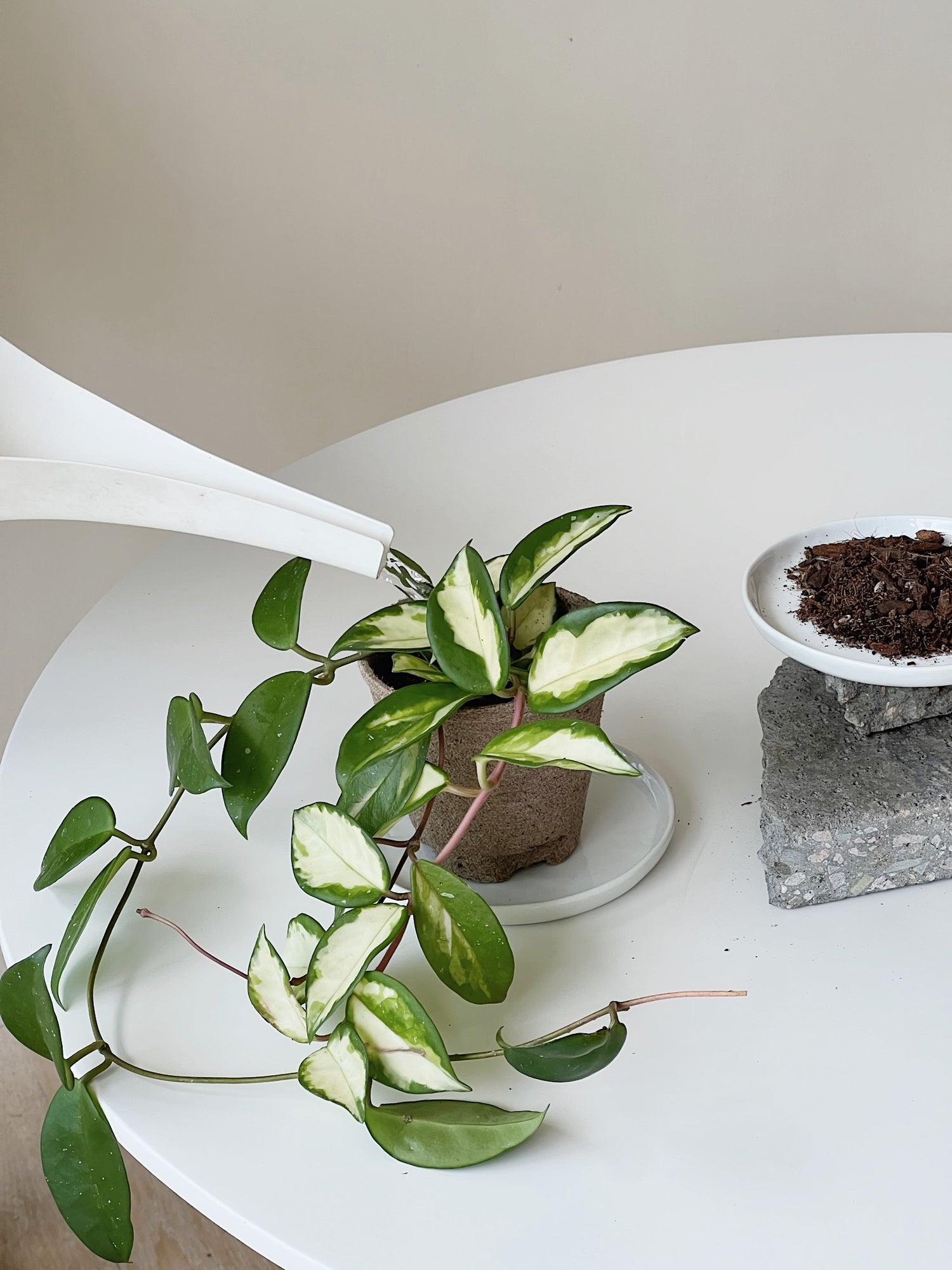
Watering is often the most challenging part of plant care, and overwatering is one of the most common causes of decline. Rather than following a fixed schedule, consider your home’s light, temperature, humidity, airflow, pot size, and soil. Check the plant and soil first, then water according to what they need.
When to water
- Check soil
Use your finger or a moisture meter to check below the surface. For many houseplants, water when the top 1–2 inches of soil feel dry. Succulents and other drought-tolerant plants may need the soil to dry more thoroughly between waterings.
- Observe
Plants often show visible signs of thirst. Philodendrons and pothos may soften or droop, while Calathea and Monstera leaves may curl. Boston ferns can lose color when they become too dry. Use these signals together with a soil check rather than relying on appearance alone.
What water to use
Rainwater and filtered water are the best choices. Tap water is fine unless it’s softened.
How to water
Run water slowly around the pot until excess drains from the bottom. Allow the pot to drain completely before returning it to its saucer or decorative container.
Pest Prevention
-
Pests are easier to manage when they are caught early. Common houseplant pests include aphids, whiteflies, mealybugs, scale, thrips, spider mites, and fungus gnats. Inspect leaves and stems regularly, isolate affected plants, and support overall plant health with appropriate light, watering, and airflow. Treat the specific pest promptly and repeat as directed until the infestation is controlled.
-
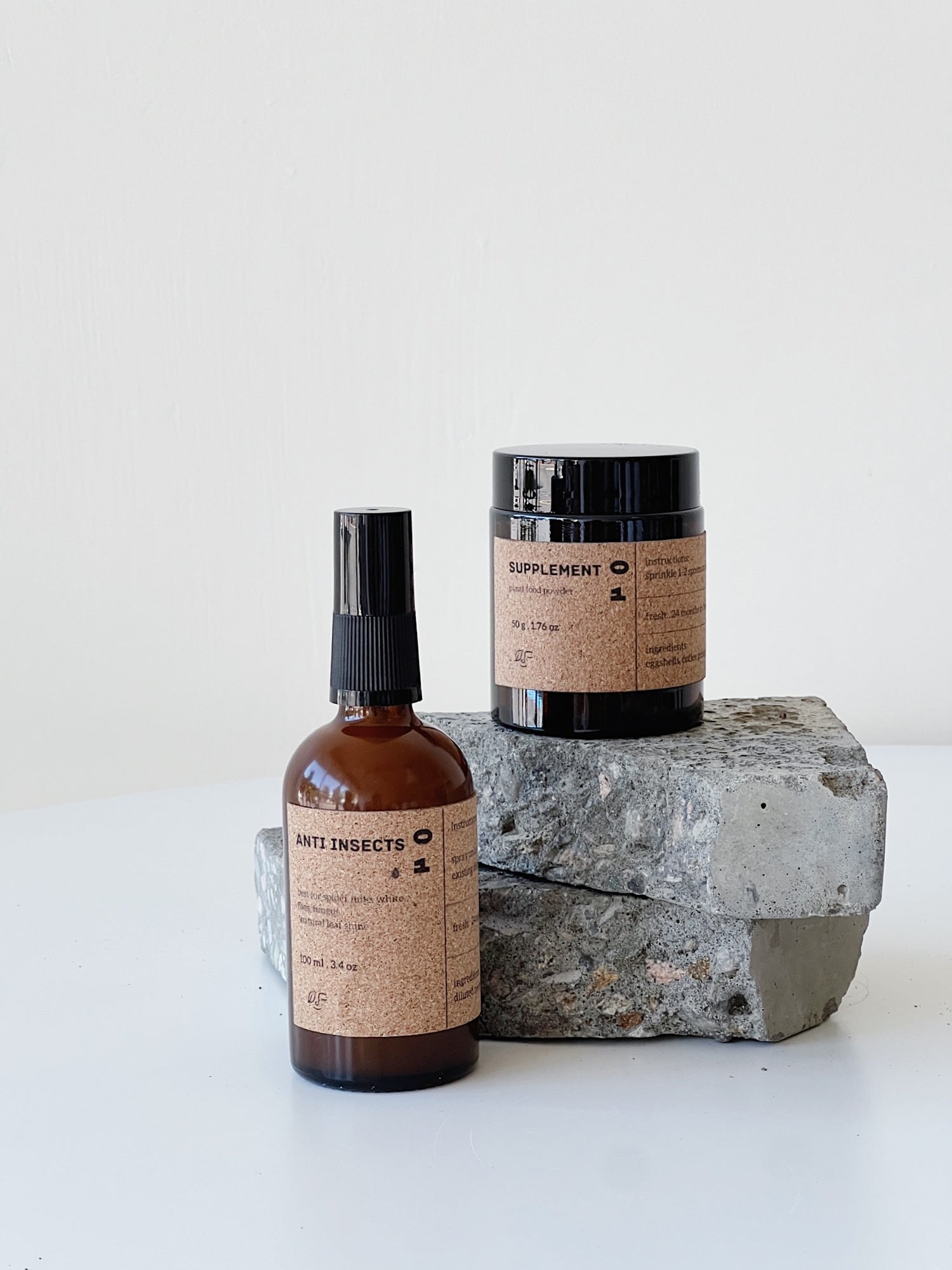
Ti Tree Anti insect 02 contains neem oil, a plant-based oil widely used in gardening. Apply according to the product directions and test a small area first, especially on sensitive foliage.
- 100 ml: Apply every two weeks for routine care, or 1–2 times per week when treating an active issue. Follow the product directions.
Fertilizing
-
Houseplants grow in a limited volume of soil, so nutrients need to be replenished over time. Feed plants during active growth, usually in spring and summer, and reduce or pause feeding during slower winter growth. Use a mild fertilizer at the recommended strength; too much can damage roots and cause salt buildup in the soil.
-
Ti Tree Supplement 02 is made with composted organic ingredients for gentle, slow-release nourishment. Apply during active growth and water normally.
- 50 g: Sprinkle 1–2 spoonfuls over the soil surface once a month during active growth.